Let’s be honest—Hollywood loves a good art heist. Films show suave thieves in tailored suits laser-dodging their way through hyper-secure vaults to snatch a canvas just for the thrill of the chase.
But real-world art thefts? They are often way weirder, clumsier, and infinitely more fascinating than anything a screenwriter could dream up. When real criminals target multi-million-dollar masterpieces, things usually get chaotic very fast.
Here are three incredible, real-life art heists that prove truth is stranger than fiction.
1. The Paris “Spider-Man” Caper (2010)
If you were going to nickname an art thief, “Spider-Man” sets a pretty high bar. But Vjeran Tomic absolutely earned the title. A professional cat burglar with a penchant for scaling the sheer brick facades of Parisian apartment buildings, Tomic pulled off one of the most staggering modern museum robberies in history.
[ Target: Musée d'Art Moderne, Paris ]
                   │
                   ▼ (The Plan: Steal ONE painting by Fernand Léger)
[ The Twist: Motion sensors fail, security guards are asleep ]
                   │
                   ▼
[ The Result: Tomic decides to "window shop" and takes 5 masterpieces instead ]
In May 2010, Tomic broke into the Musée d’Art Moderne de la Ville de Paris by systematically removing a window pane. He was originally hired by a shady antiques dealer to steal just one piece by Fernand Léger. However, once inside, he realized the museum’s motion sensors were broken and the guards were fast asleep.
Finding himself completely undisturbed, Tomic essentially went window shopping. He leisurely strolled through the dark galleries and pulled down four extra paintings by Pablo Picasso, Henri Matisse, Georges Braque, and Amedeo Modigliani simply because he liked them. The total haul was worth an estimated $110 million—and all five masterpieces remain missing to this day.
2. The Great Speedboat Escape (2000)
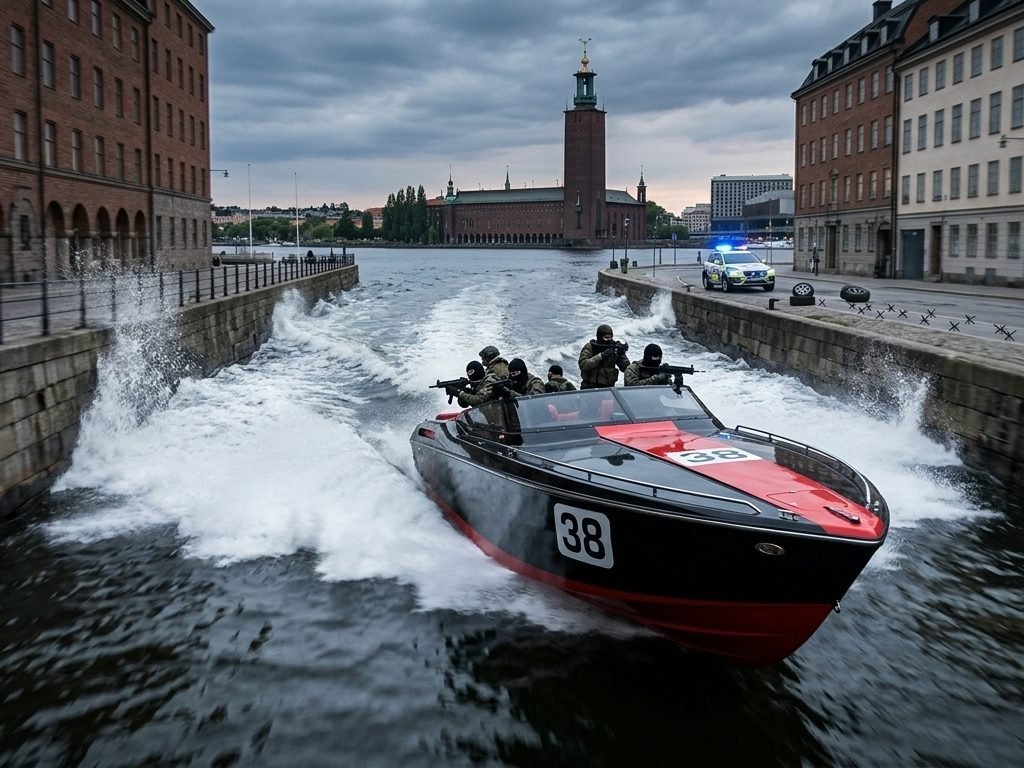
If the Paris heist was a masterclass in stealth, the Stockholm Nationalmuseum robbery in December 2000 was a straight-up action movie. This wasn’t a midnight break-in; it was an aggressive, broad-daylight raid executed with military precision.
Three armed, masked men burst into the museum during public hours, holding terrified visitors at bay with submachine guns. In just a few minutes, they ripped a Rembrandt self-portrait and two small Renoir canvases right off the walls.
Step 1: Set off car bombs across Stockholm to confuse police dispatcher.
Step 2: Toss steel spikes onto the roads around the museum to pop police tires.
Step 3: Grab the Rembrandts and Renoirs.
Step 4: Leap into a waiting speedboat parked on the museum's canal and roar away.
The thieves had deliberately coordinated car bomb explosions across opposite sides of the city to completely tie up Stockholm’s emergency responders. To double-down on their getaway, they threw handfuls of sharp caltrops (steel spikes) across the museum’s surrounding streets to puncture the tires of any responding squad cars. They sprinted out of the building, jumped into a high-powered speedboat idling in the adjacent canal, and sped out to sea. (Thankfully, due to a massive international sting, all three paintings were eventually recovered intact).
3. The Pirate Who Stole the Apocalypse (1473)
We tend to think of art heists as a modern phenomenon born out of the twentieth-century art market boom. But people have been stealing high-end culture for centuries. Case in point: the oldest recorded art heist in history, which involved literal high-seas piracy.
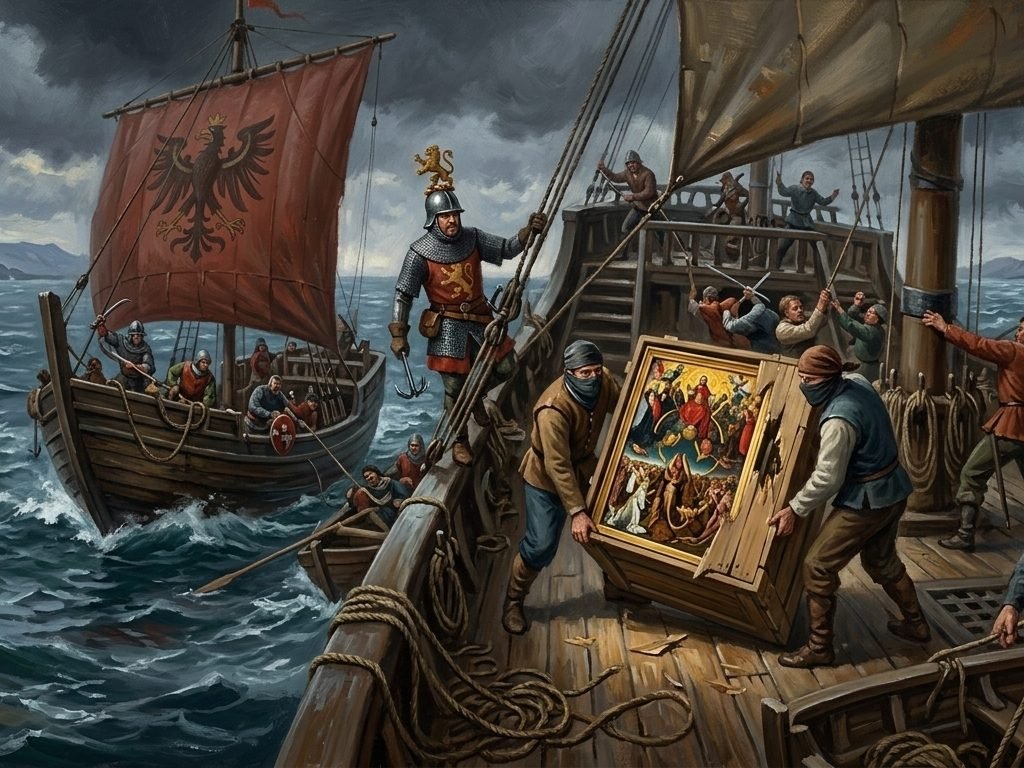
In 1473, a massive, stunningly detailed triptych painting called The Last Judgment by Hans Memling was loaded onto a merchant ship sailing from Flanders to Florence. It was intended for a wealthy church, but it never made it to port.
Instead, the vessel was ambushed in the North Sea by a notorious Polish privateer named Paul Beneke, who was acting on behalf of the Hanseatic League. Beneke boarded the ship, plundered its cargo, and claimed the gigantic masterpiece as war booty. The pirates didn’t try to sell it on a black market; they sailed straight to Gdańsk (modern-day Poland) and gifted the stolen masterpiece to the local Basilica of the Assumption. Despite furious protests from the Pope and the Italian merchants, Gdańsk refused to give it back. Aside from a brief kidnapping by Napoleon’s troops centuries later, it remains in Poland to this day.