Walk into a premier gallery space today. You will notice a distinct, visceral shift. Textile art is officially breaking boundaries. Fabric has escaped its traditional craft label. It now dominates global art halls and luxury interior design.
Audiences are moving past flat canvas paintings. Instead, they embrace three-dimensional, multi-sensory fabric experiences.
The UpNEXT 2026 Spotlight: Tithi Arekar
This artistic shift takes center stage at UpNEXT 2026. The groundbreaking group show is curated by the visionary Tela Art Gallery. The exhibition serves as a powerful launching pad for next-generation icons. It highlights creators who push their mediums to the absolute limit.
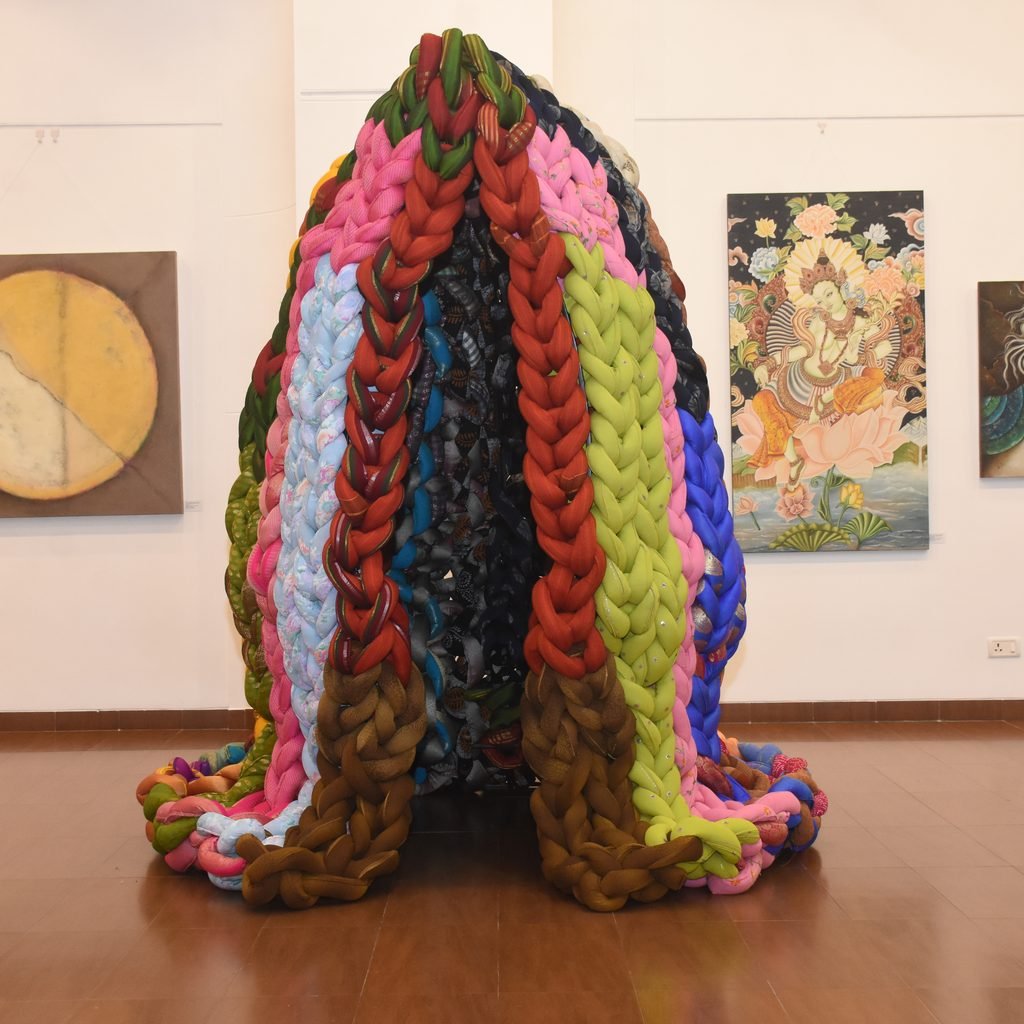
A monumental installation by Tithi Arekar anchors the show. The contemporary textile artist is famous for her massive soft structures. She transforms labor-intensive knitting and weaving into immersive architectural wonders.
Tithi Arekar’s towering braided soft sculpture on display at UpNEXT 2026.
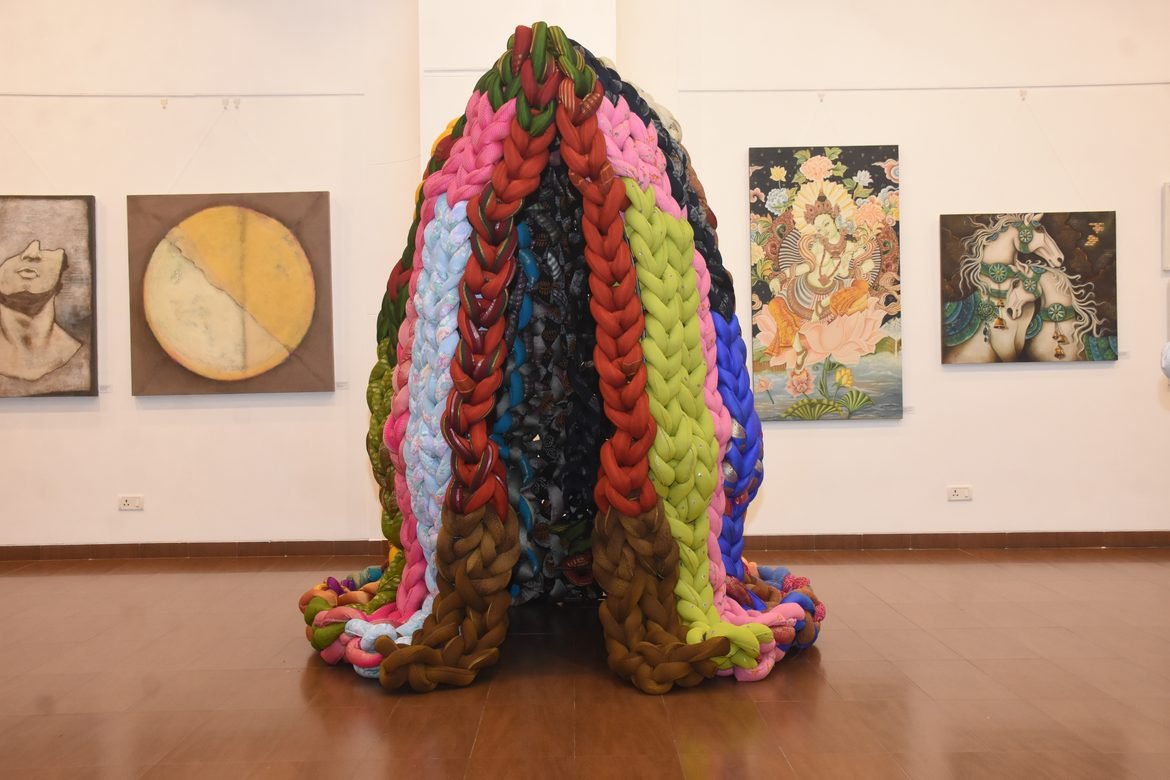
Arekar’s featured installation commands the entire gallery room. It presents an imposing, cavernous form woven entirely from hyper-chunky, multi-colored braided textiles.
Anatomy of the Installation
- The Scale: The monumental soft sculpture rises majestically from the floor. It mimics an organic shelter or a biological portal.
- The Craft: Heavy, intertwined columns of ultra-thick braided yarns form the exterior. A vibrant palette of lime green, electric pink, and cobalt blue cascades downward.
- The Contrast: Colors invert into deep navy and charcoal black inside the hollow core. The texture pulls viewers forward, demanding three-dimensional exploration.
Arekar’s signature style honors touch, memory, and spatial presence. She scales traditional hand-braiding techniques up to monumental proportions. By doing this, she forces the audience to confront fabric as pure, dominant architecture. You can read more about her journey in our Artsmart Emerging Artist Index.
Why Fiber is Finding a Global Spotlight
Historically, textile traditions like Punjab’s Phulkari, Andhra Pradesh’s Kalamkari, or intricate Zardozi embroidery served as symbols of cultural legacy, utility, and wealth. Today’s contemporary wave is a powerful resurgence. Driven by a collective yearning for sustainability, material memory, and tactile interaction, modern creators are reimagining what fabric can say.
Fabric offers incredible flexibility. It bridges regional craftsmanship with avant-garde conceptual art. Check out our guide on collecting fiber art to see why collectors love this medium.
Fashion, Art, and Home Intersect
This artistic movement is changing luxury spaces. Major design houses are actively jumping borders into galleries and homes:
- The Embroidered Wall: Meticulous aari embroidery and French knots now become independent wall art.
- Handcrafted Panels: Indigenous textile techniques turn large-scale fabric panels into interior centerpieces.
- Sculptural Fabric: Artists turn scrap textiles into eccentric figures to explore intergenerational healing.
Looking Forward
Textile installations do something paint never could. They absorb sound, hold physical weight, and invite human interaction. Spaces increasingly value eco-friendly sourcing and personalized storytelling. As a result, the boundary between fine art and fiber craft will continue to dissolve.
Curators like Tela Art Gallery prove a vital point. Threads are no longer just holding things together. They are actively building the future of contemporary art.